Biodegradable Tree Shelter
12.8.2024 - 1.12.2024 Santiago, Chile
This project was a research toward more sustainable tree shelters, conducted in Santiago, Chile, together with a multidisciplinary team led by Prof. Jose Allard.
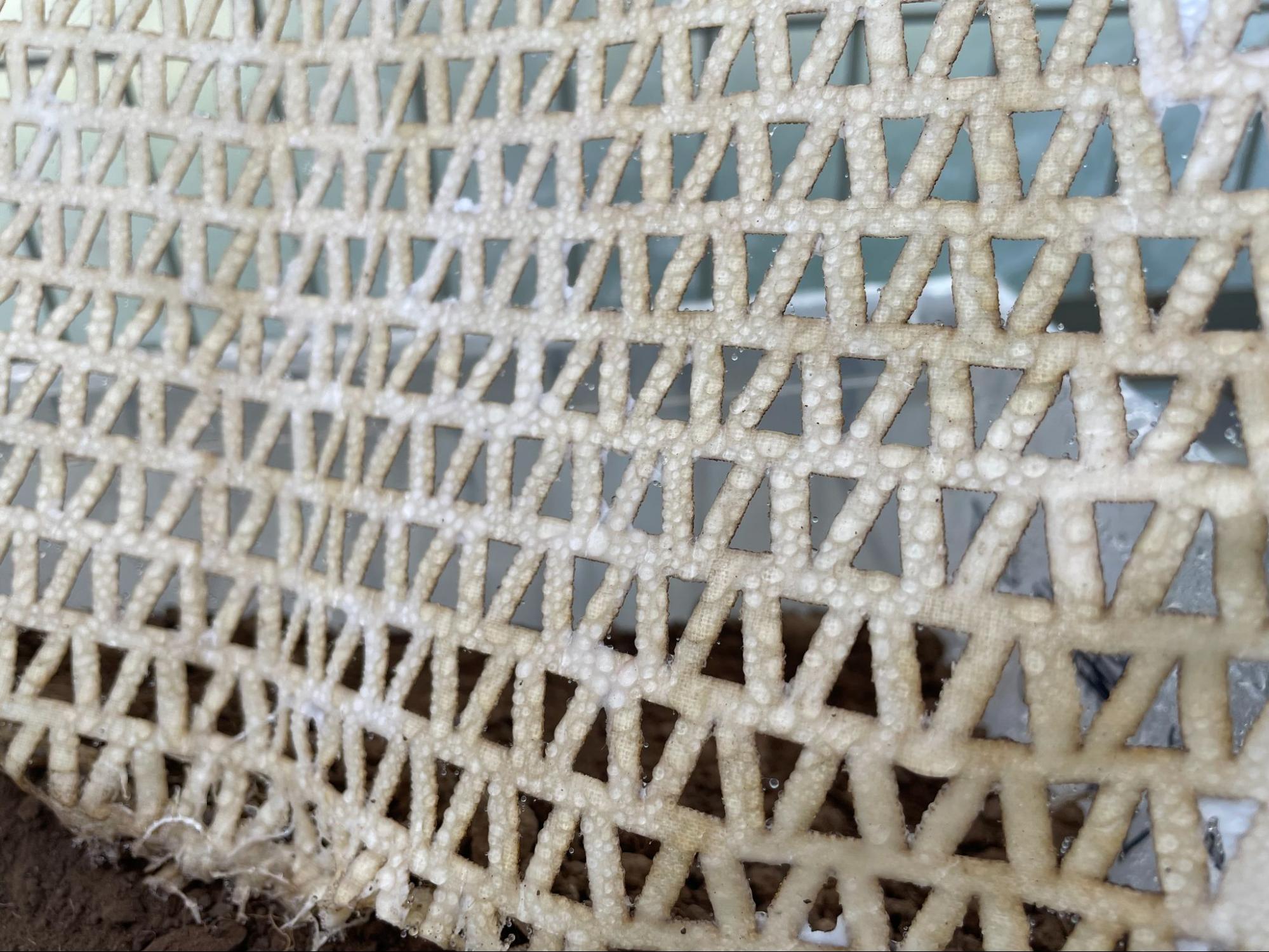
Chile is tackling climate change through reforestation. The original and most widely used tree shelter is a triangular polypropylene one. We aimed to show that our design could compete in price and quality (tree survival rate) and provide additional benefits for the tree such as water collection and weed protection - while remaining biodegradable in situ.
Biodegradability
The tree shelter (further just TS) protects the young tree in the critical first years of its life, while the tree bark is still developing. After this time, the TS is no longer necessary and therefore should be removed. However, some of the planting sites are at remote locations, so the plastic tree shelters are left there, polluting nature with microplastics. We are proposing a biodegradable alternative that can be safely left with the tree and will fully decompose after 2 years, when it's no longer necessary.
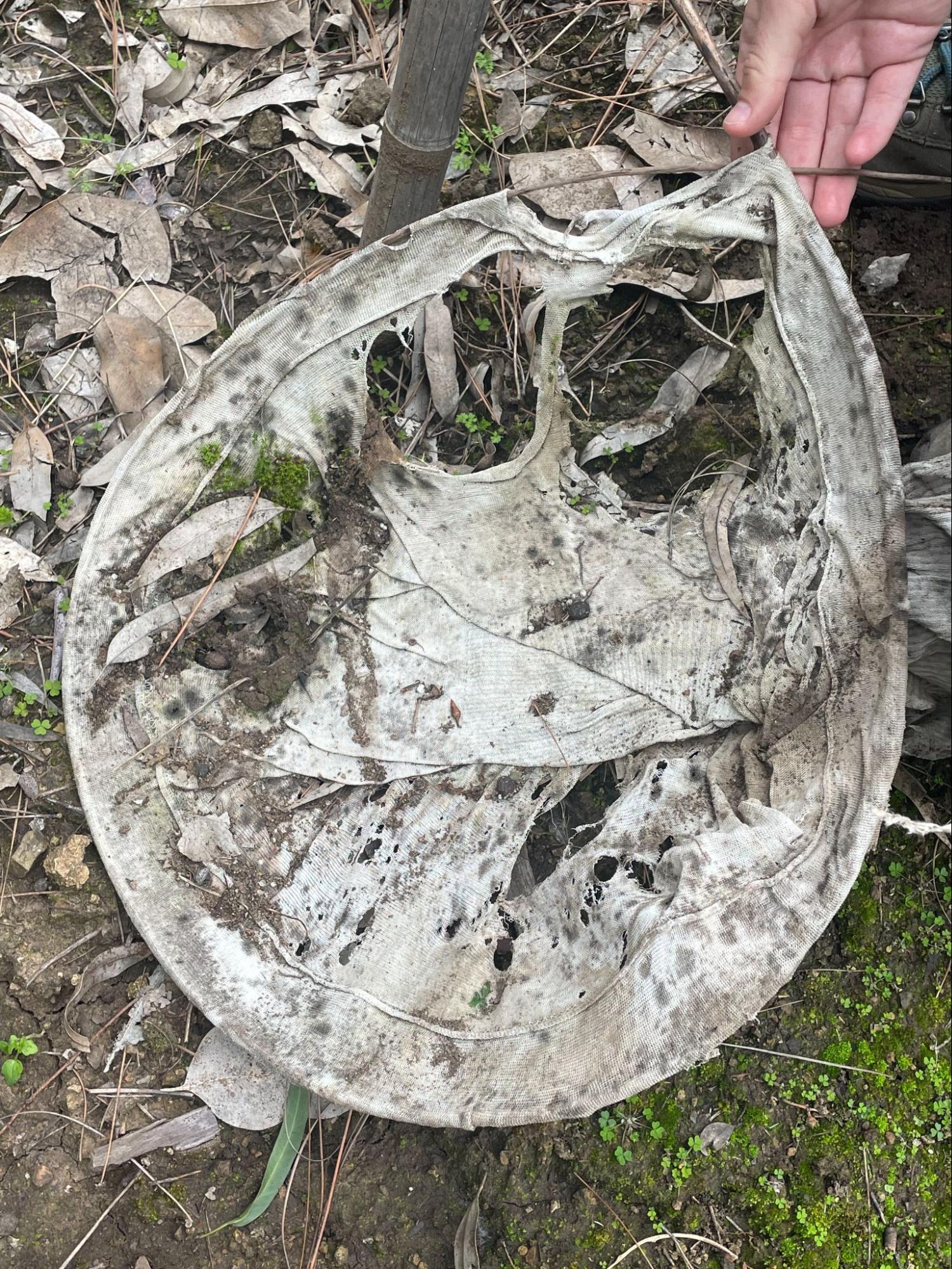
The first prototype of our TS was made out of 100% viscose and was used alongside the plastic TS at the Bosque Santiago reforestation site in spring 2023. A year later, we did a qualitative comparison of the level of decomposition of these two tree shelters.
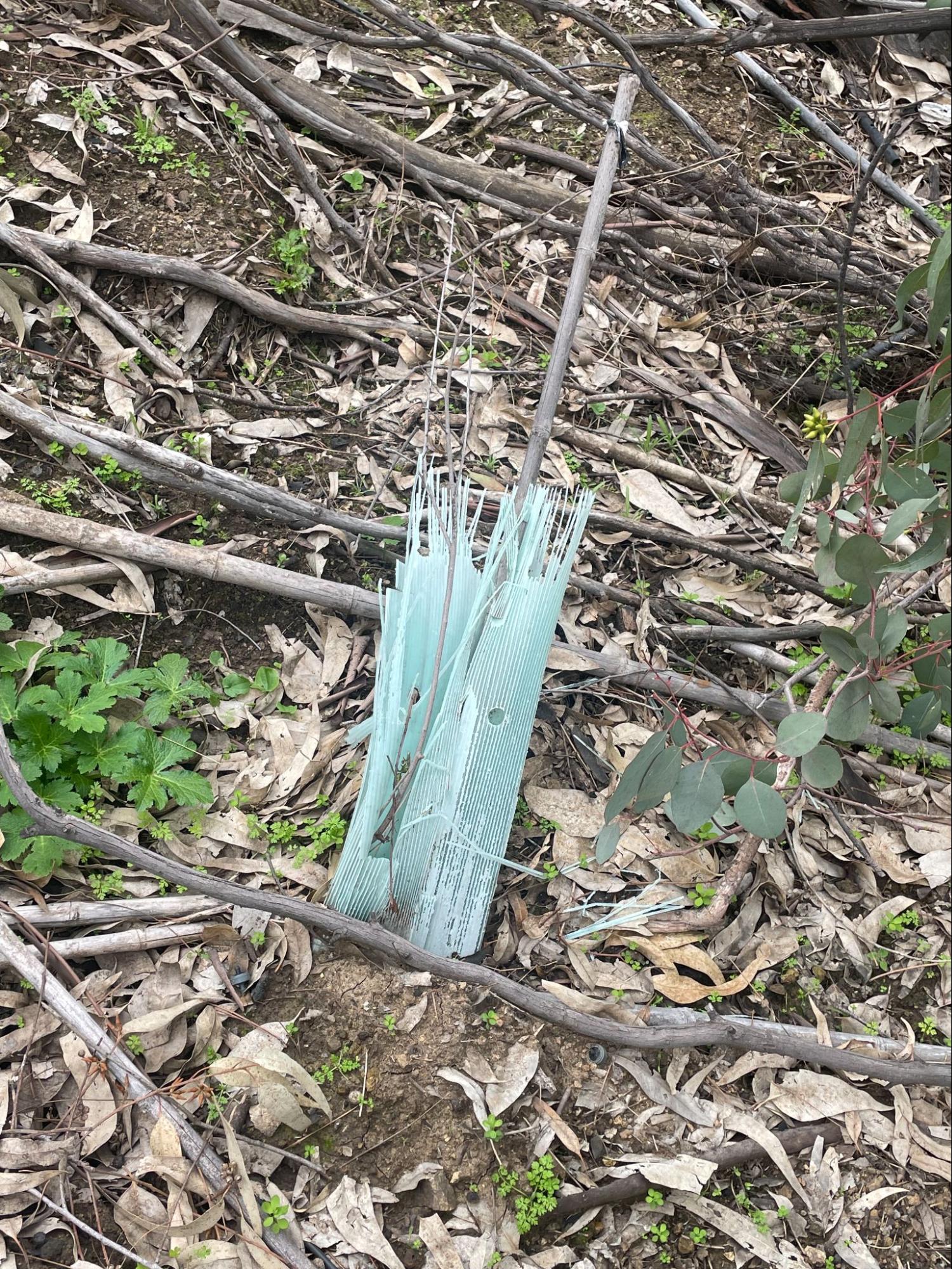
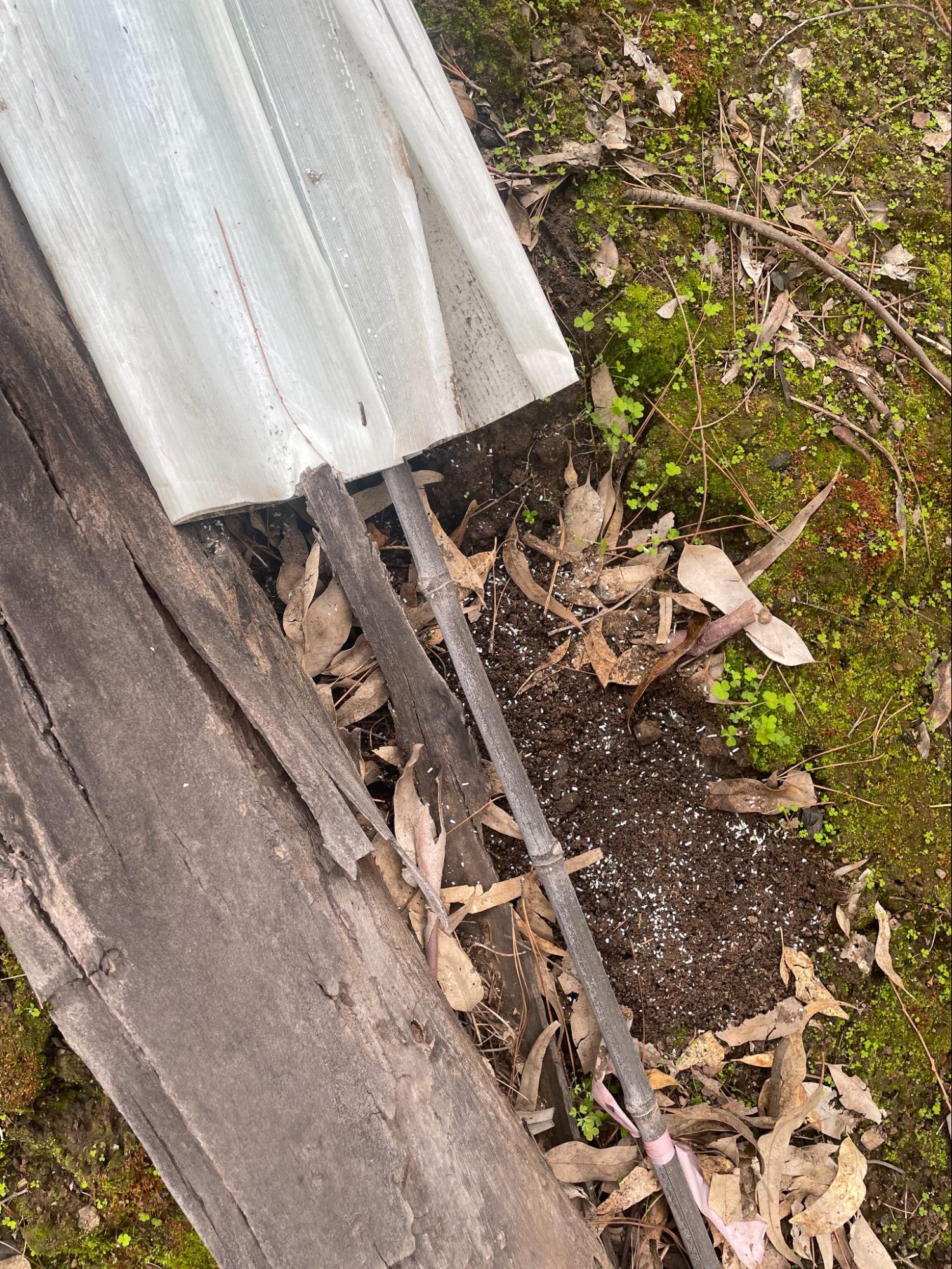
The pictures above show the state of the plastic tree shelters after a year in the field. Some were more intact than others, but as they were falling apart, they turned into small microplastic pieces that were getting into the soil.
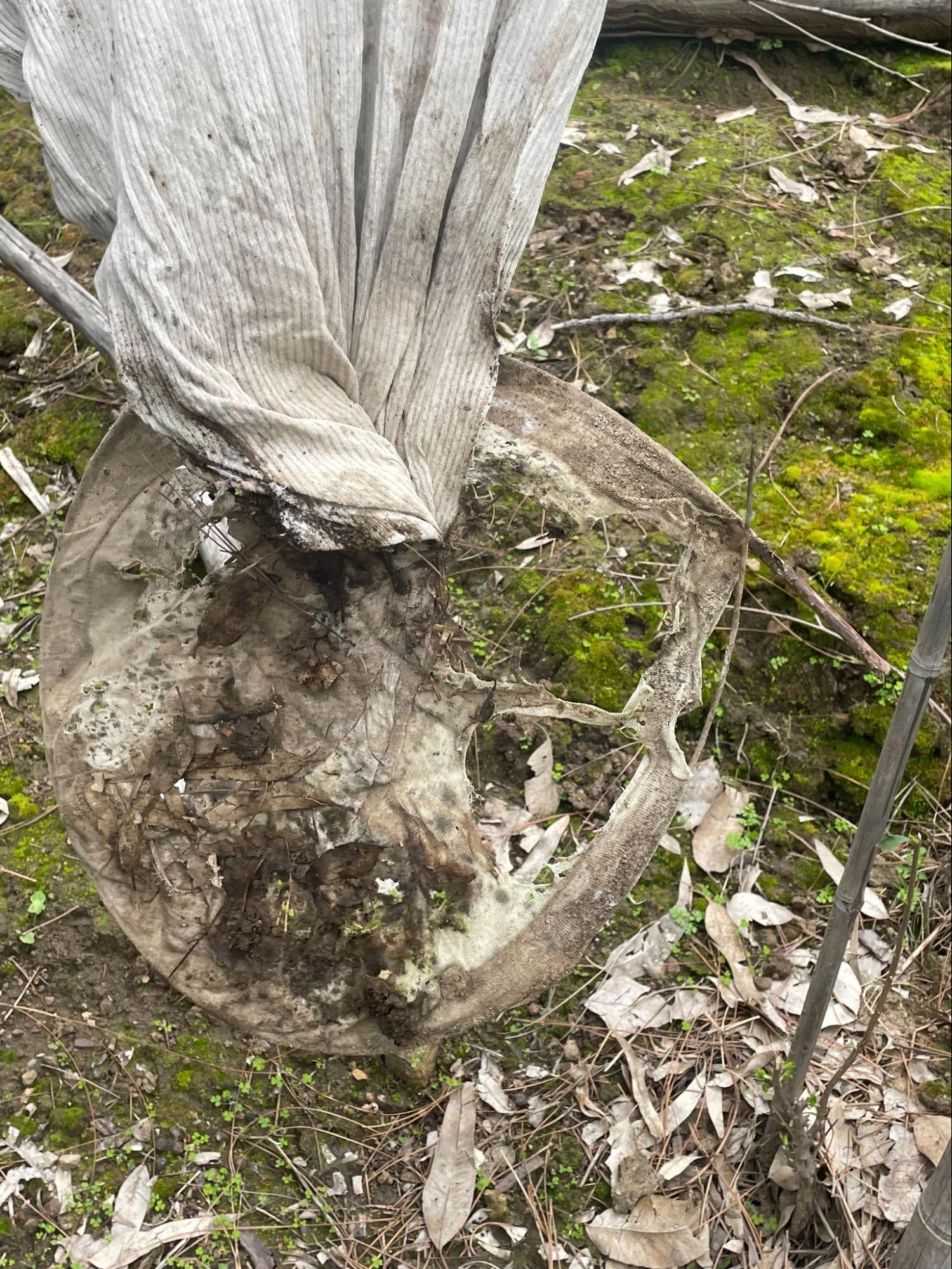
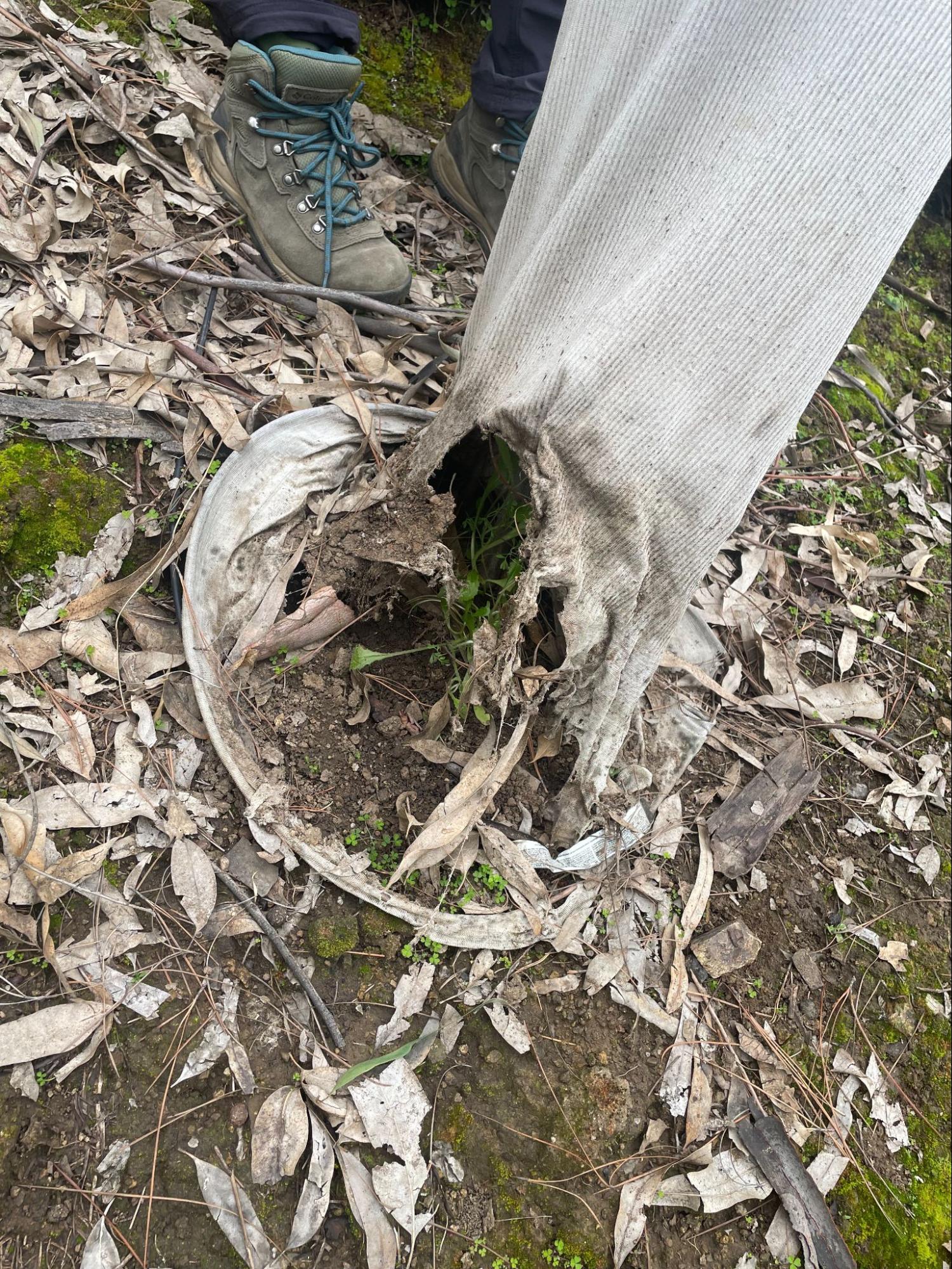
On the other hand, the bottom parts of our prototype, which were originally buried in the soil, started to decompose in situ. As the TS were in nature for just a year, it is the beginning of a longer decomposition process. The young trees still require protection for at least another year.
Water vapor harvesting
One of the most innovative aspects of our TS design is the ability to capture water from the air, inspired by fog capturing - a technique successfully used to collect water in dry and remote coastal areas. The extra water is intended to increase the survival chance of tree saplings, which is generally around 50% without a tree shelter, and around 85% with a commonly used plastic one. As per LifeNiebulas data, trees receiving water from captured mist had a survival rate of 87% using the Cocoon TS, 89% using the IFWC, and 83% using the AFDS.
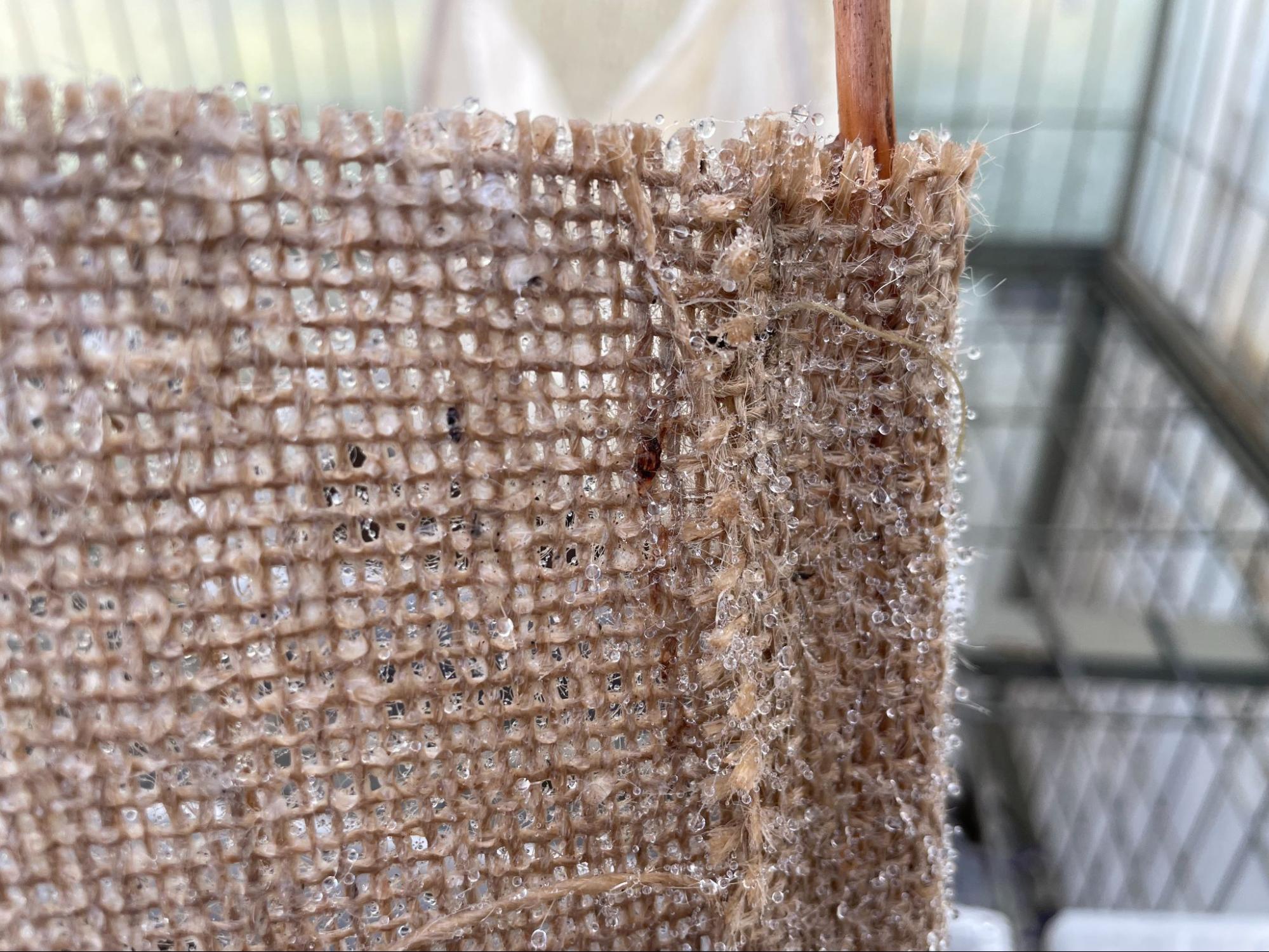
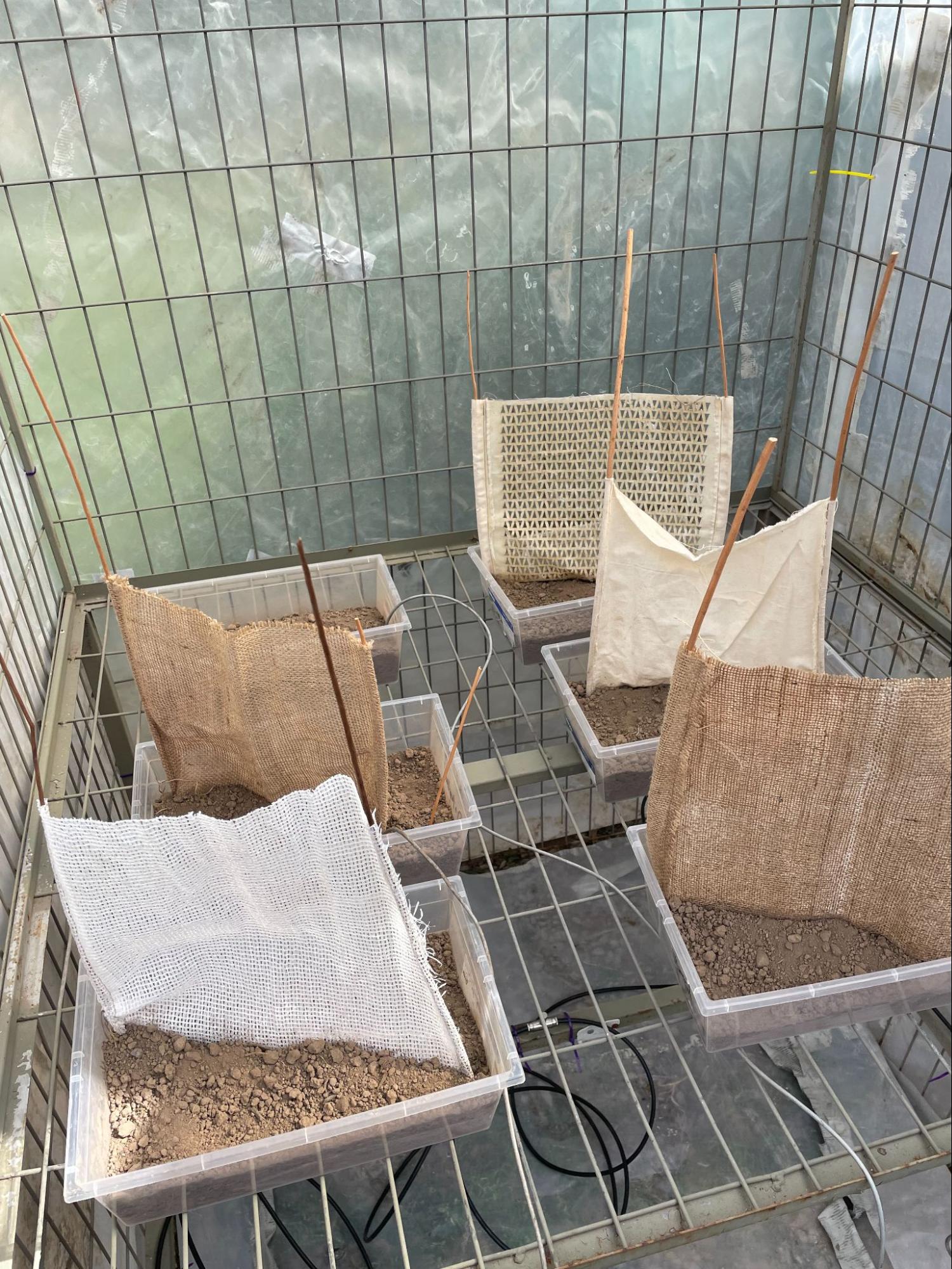
We tested the fog-capturing abilities of various natural materials (such as hemp, knitted cotton and woven cotton fabric) and compared them against the state of the art: Malla Raschel. The materials were cut to 30×30 cm sheets, inserted 5 cm into oven-dried soil with 25 cm exposed to the air, and left in a fog chamber for one hour. All containers were weighed on a scientific scale before and after.
| Material | Water collected (g) |
|---|---|
| Normal Hemp | 11.37 |
| Waxed Cotton | 17.98 |
| Normal Cotton | 6.97 |
| Malla Raschel (reference) | 39.31 |
| Waxed Hemp | 11.13 |
| Control (no TS) | 4.85 |
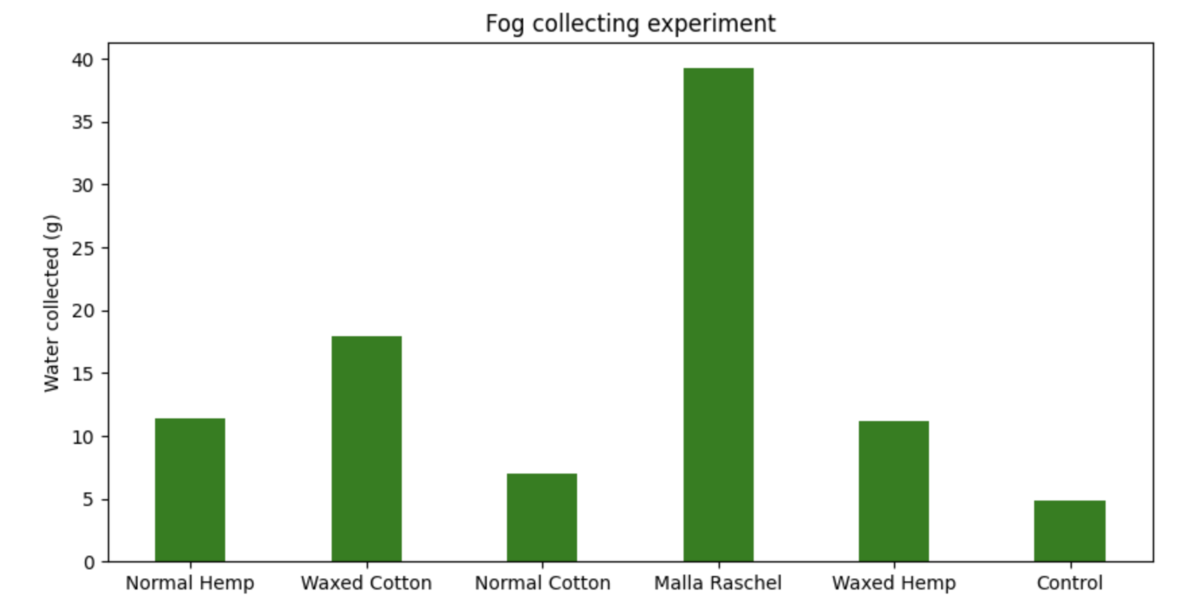
All natural fabrics collected more water than the control, with waxed cotton being 3.7 times more effective than no shelter at all. Malla Raschel still leads the field, but we are experimenting with water-repellent coatings to close this gap.
Temperature
One of the main roles of the tree shelter is to create an ideal microclimate for the young tree - protecting it from extreme heat in summer or frost in winter, while keeping the internal temperature within the optimal range for tree growth: 20°C to 24°C. We designed an experiment to compare how our fabric TS performs against the plastic one and a bare control.
We placed temperature sensors at 5 cm above the ground inside each setup and measured continuously for 92 hours.
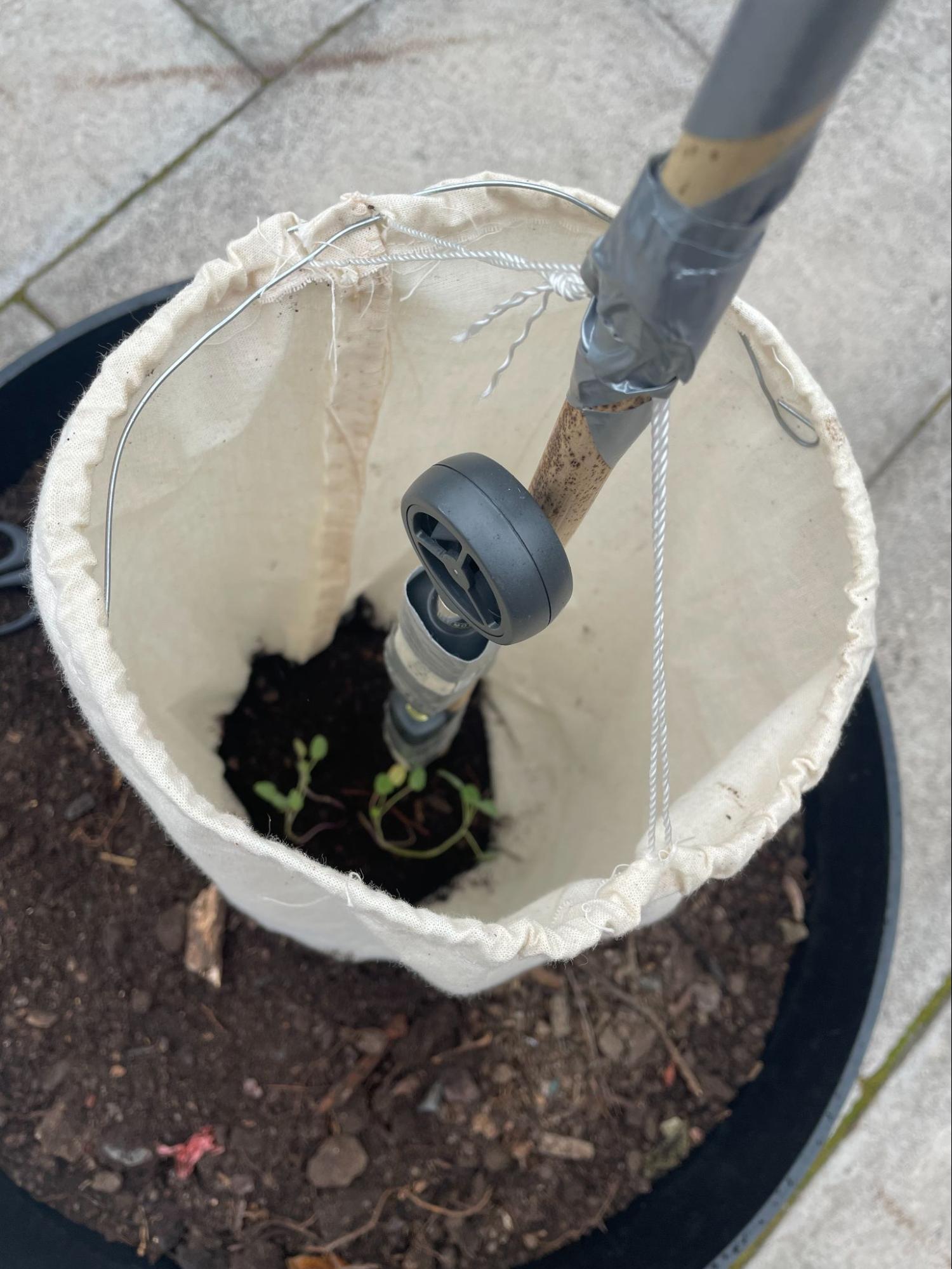
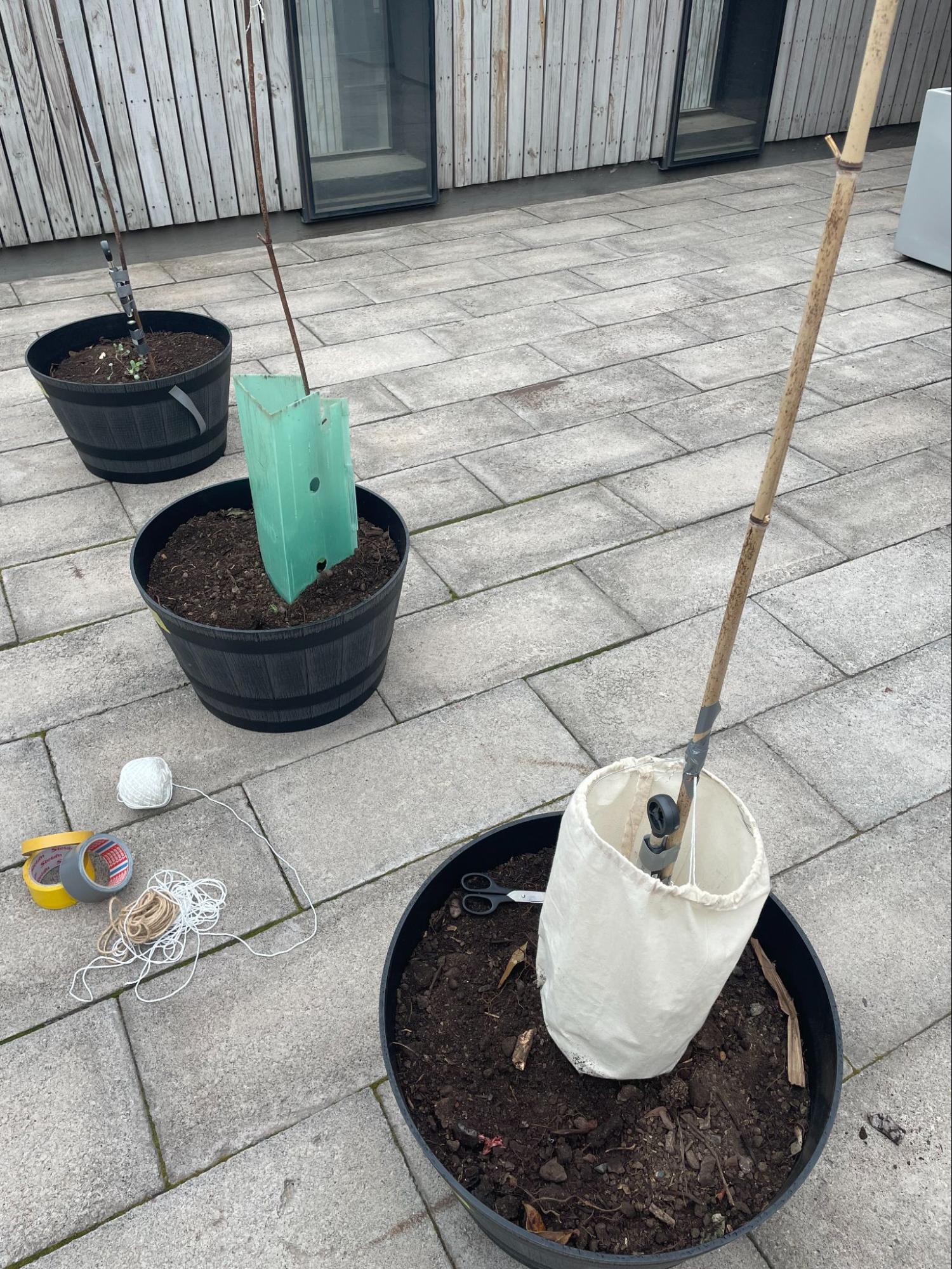
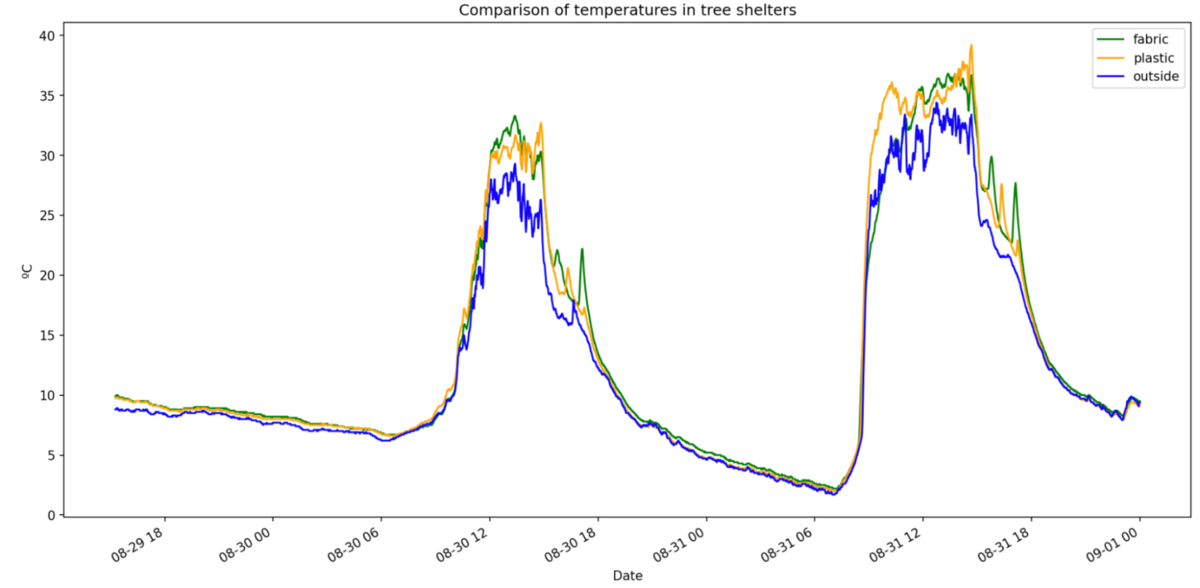
At first glance, the fabric TS performed similarly to the plastic one. But looking more carefully at how long each option kept the tree within the optimal 20–24°C range:
- Fabric TS: optimal temperature 5.3% of the time
- Plastic TS: optimal temperature 3.7% of the time
- No shelter (control): optimal temperature 4.1% of the time
These are small differences, but they are enough to show that the proposed fabric tree shelter is potentially no worse at creating an optimal microclimate — and possibly even slightly better — than the commonly used plastic one.